Monday, June 20, 2011

Neptune, Father of Fish Guts


Blog, meet Neptune, King of the Sea Fish Emulsion.

As I've mentioned before, we use fish emulsion* to give our soil blocks a little oomph before transplanting them. The product, which is brown and gloopy and smells strongly of fish, has all sorts of helpful nutrients in it to give those little plants a nice start. Transplanting can be traumatic for a plant, so any help we can give them is great.

The method: in a watering can, mix about 1/8 cup of fish emulsion for every gallon of water. And for the love of Pete, do NOT let leftovers sit around. Get rid of them once you're done, or you will be haunted by the scent of the sea forevermore.


*A fancy term for fish guts.

Saturday, June 18, 2011

Death and the Farm


The overabundance of funerals in my family over the last month has me thinking about a lot of things, death naturally being one of them. When I returned to the farm two weeks ago, I felt much more attuned to the ebb and flow of life here - the balance of predator and prey, the birth of baby goats destined to become goat burgers, the knowledge that our Peking ducks will be ready to process in just a month.

In her book Animal, Vegetable, Mineral, Barbara Kingsolver notes the increasing distance between Americans and their food. She describes how few people in this country have ever processed a chicken or lamb or cow. Instead, we go to the grocery store, where we purchase the appropriate part all nice and clean in its styrofoam and cellophane packaging, beautiful beneath the flourescent lighting, bearing no hint of its messy beginning.

It’s a disturbing train of thought. How many of us can say with certainty which part of the steer originally housed our rib eye steak or chuck roast? In the store, thighs and breasts, ribs and shanks, are all completely devoid of their original context. So few people today have anything to do with their own food production, lacking even a lonely tomato plant to dot their lawn. We think of food as it appears in the supermarket: clean, unblemished, stacked neatly into tall piles and organized by color.

This separation between animal and human has ramifications that reach beyond our dinner plate. It speaks to something far more substantial: our relationship with death.

For many, the only time we encounter the dead is when a loved one passes away. Often, we do not witness the moment of their passing. Only later do we see them turned out at a viewing or funeral, the product of modern embalming practices. With rituals like these, it is no wonder that so many people find death to be upsetting, disturbing, and even traumatic.

Death and farming are remarkably intertwined. I saw my first livestock death about six weeks ago, when a sick chicken needed to be put down in case it was contagious. Brian took it and hung it upside down by its feet, before using a knife to slice the major vein running down the size of its neck. The chicken shuddered. Then it flapped wildly. Then it was still.

It was my first time to see the death of an animal on the farm... but it won't be my last.

All of which makes me wonder: does being exposed to death on a farm make it more acceptable in life? It's hard to say. I don't think it makes it any easier, necessarily. But I think that it makes death a little less traumatic.

On a farm, as in nature, death does not happen arbitrarily. The chicken is sick, Old Yeller needs to be put down, the lamb will be eaten and respected as part of our meal. There is always a reason. Death is merely one step in a long chain of events - and not necessarily the last one.

If more consumers were involved in their food, up to and including witnessing and perhaps helping with its death and processing, then I have no doubt that they would be much more mindful of how they used that animal. And if we were more exposed to death and its effects on the farm, then we might be a little better prepared to meet with it in life.

Thursday, June 16, 2011

She Thinks My Tractor's Sexy

Breaking news: I am now an official tractor driver!


Sadly, I'm too short for the big tractor. But that's okay - this tractor doesn't slip out of gear while going down hills! There's a silver lining to every cloud.

Tuesday, June 14, 2011

New Potatoes and New Beginnings

This was a post that I meant to do last week, but due to my afore-mentioned technical difficulties, I'm just now getting to it.

The last two weeks have been full of planting things: tomatoes, peppers, okra, lettuce, cantaloupe, brassica mix and squash, to be precise. There's plenty more to put in the ground, of course. But in the midst of all this planting, it's easy to forget sometimes about what we've already planted... like potatoes, back in early April.


Yes, they are purple. They're Caribè potatoes.* And they were delicious, soft and tender and melt-in-your-mouth-y when we ate them.


And here is Brian, harvesting away:


Anyways. I just thought everyone might like to see the fruits potatoes of our labors.


*It's best if you pronounce it like Speedy Gonzales.

The Passing of a Friend: My Trusty Canon

It is with great sadness that I mourn the passing of my faithful Canon Powershot. My sidekick and friend for five and a half years - which is a long time for a digital camera - he went with me on many adventures, including all over Europe and for two action-packed years of AmeriCorps NCCC. He was a chunk, but quite a trooper.

This, of course, explains my lack of posts over the last week. I've been taking pictures with my phone, but the connection on the farm is poor enough that I'm having trouble uploading them. So stay tuned, faithful readers! Hopefully salvation will come soon.

My last pictures, taken at a CRAFT tour in late May at Twin Springs Farm. (Check the link for my write-up on the CRAFT blog about the tour.)


Wednesday, June 8, 2011

To Market, To Market

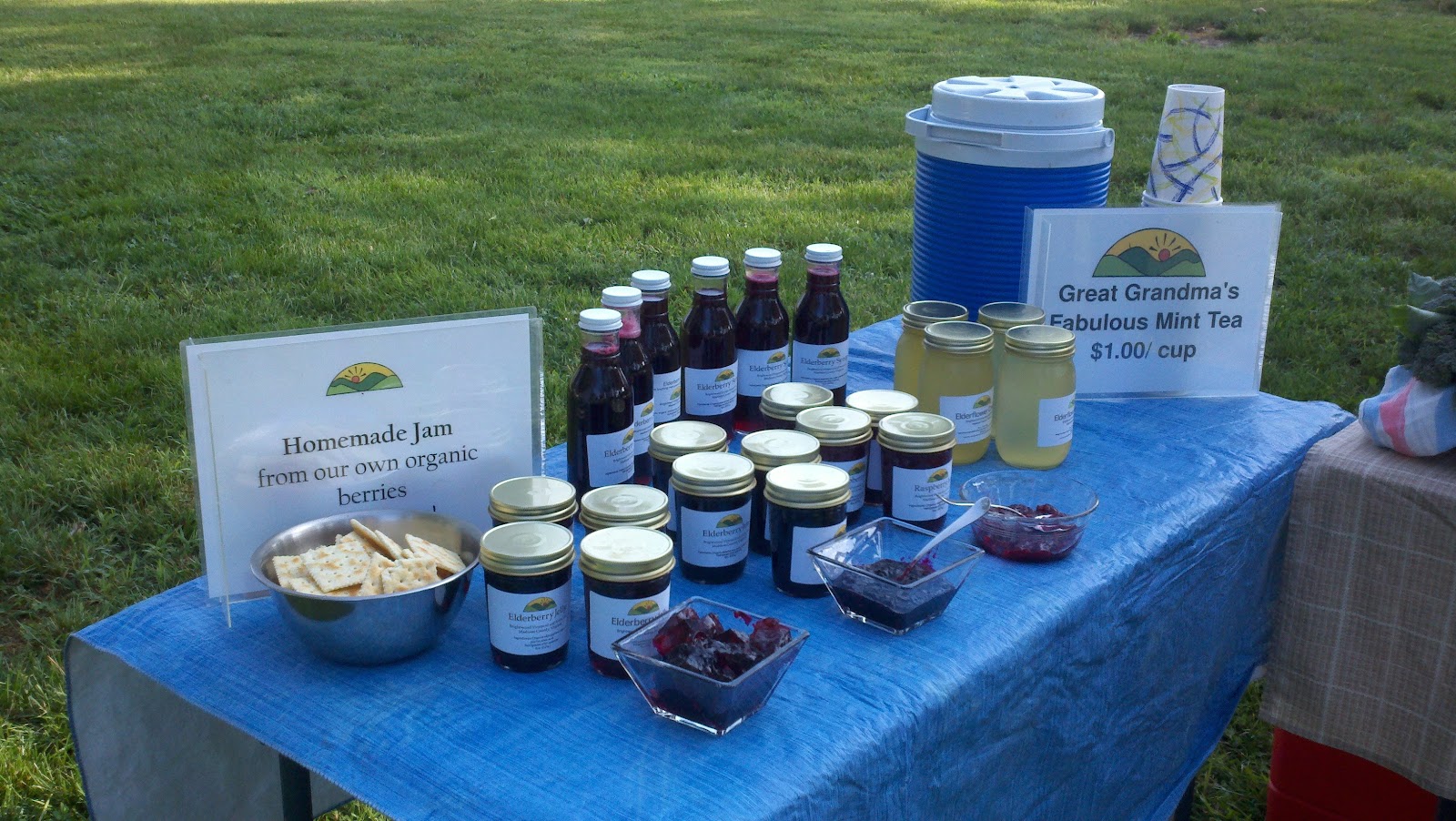
Saturday morning is the hallowed time of farmers markets for small family farms from coast to coast, and Brightwood Vineyard and Farm is no exception.


Usually I go help Susan at the Charlottesville Farmers Market, which is down in (can you guess?) Charlottesville. But this weekend was different - I went to the Madison Farmers Market, a mere five miles away from the farm, to help Autumn set up.


The Madison Farmers Market started just three years ago, and judging by the jump in sales this year, it's really starting to take off. According to Dean and Susan, it was rare to break $100 at that location in the past. Not too hard to imagine why... it's a small market in a rural area, where lots of people grow their own food and there's not a lot of attention paid to eating local, organic fare. However, this year the market has been pulling in around $175 or more regularly... and, quite often, more.


Autumn has more or less taken the Madison Farmers Market on as her project. She has quite an impressive background in management and food services (coffee, specifically), so I don't know how much of the jump is due to her enthusiasm and marketing savvy, and how much is due to the market's growing prominence in the area. It's probably a bit of both.


One of the nice things about having two such different markets - one small and rural, one large and urban - is that the shoppers at those markets are interested in very different things, and we can allocate our different products accordingly. Vegetables do very well in Madison, for example, so if we only have a few bunches of radishes, Madison gets them. On the other hand, few people in Madison are willing to pay $5 a carton for eggs, so the lion's share of those go to Charlottesville. Folks in Charlottesville go absolutely mad for herbs, but in Madison? Not so much.


Perhaps most importantly, the Madison Farmers Market is a valuable venue for being involved in the local community. It's not only a way for the farm to get to know its customers, but to also meet other local farms and develop connections with them.


After all, isn't that supposed to be the point? We want consumers to be engaged with their food, to know where it comes from and to question it. ("Hello, I was just wondering if you feed your cows chicken blood?")

We want people to invest money in their own communities, not send it to remote corporations in NYC, LA, or across the ocean. And the more consumers visit small, local farmers markets and buy food from small, local farmers, the closer we inch to taking back our food, our power and our lives.

Tuesday, June 7, 2011

Teddy Bear, Teddy Bear, say good night!

I'm back! Hopefully I won't have to get on an airplane again for a very long time.

I'll make some more informative updates later about events over the last week, but I just want to share something that happened yesterday.

As Brian and I were driving to the farm house to harvest, what do you think we saw running across the road, not twenty feet in front of our car?

A black bear and her cub, of course!

Brian managed to snap a cell phone picture of them in the woods. It's not the best quality, but you can see them. Sort of.