Wednesday, October 26, 2011

Goblins, Ghouls and Garlic


Since it's that time of year where vampires take center stage, I thought garlic would be a pertinent subject. And it just so happens that we planted 2.5 rows of it this this week. What serendipity!

Garlic has got to be one of the easiest crops in the history of putting things in the ground and watching them grow. You take a clove, bury it about three or four inches down, and leave it over the winter... and voila! By spring, you have an entire head of garlic that you pull out, cure, and can store for what seems like an unending period of time.


I'm simplifying things a teensy bit, of course. But garlic is actually very easy, requires fairly little maintenance once the planting is done*, and if it is cured correctly, it won't go bad for a long, long time. Compared with pretty much any other crop, garlic is just about scraping the bottom of the "I need constant supervision" chain.

Of course, you do have to plant the garlic first. And that can be quite a process.

First, you start with a head of garlic.


Every head of garlic comes with many cloves. Each clove, if planted, can produce another head of garlic. You want a head that is plump, with fairly large, well-formed cloves.

Since you're planting the cloves separately, you have take them apart.


Multiply this by 50 pounds of garlic.**


Once the cloves have all been torn asunder and any rotten ones removed, it is time to plant. In the past, Susan has done this by using the very labor intensive method of digging four trenches in each bed, laying the cloves out, and covering them with dirt. Brian, however, stepped in to save the day.


This device is called a dibbler. Seriously. Brian made it out of scraps in the garage, based on the devise he used last year to plant garlic.

The dibbler is 30 inches across, so it fits our beds perfectly. The pointy bits protruding from the bottom poke holes in the dirt, into which individual garlic cloves fit quite snugly.


One person "dibbles," going ahead of the rest of the crew and dibbling the row with hundreds of tiny holes. Everyone else follows, poking the cloves in and brushing dirt over the top. What could be easier?


Garlic also likes to be mulched, so I guess I know what we'll be doing with the forty bales of hay that arrived this evening.


*If you're growing hard-necked garlic, you do need to watch for scapes, the curly green tendrils that grow in the spring. If you let scapes grow, the garlic will be ruined, but cutting them back sends all that energy back into the bulbs, and THEN you can eat the scapes. What could be better?

**To put this number in perspective: our 50 lbs. of garlic yielded two and a half rows. Our rows are 90 feet long, so that's approximately 225 feet. To put this yet further into perspective, the farm we visited on Tuesday ordered 150 lbs. of garlic. Radical Roots, an organic farm in the valley, also ordered 150. Waterpenny Farm, which I will talk about in a later post, ordered 220 lbs.

Saturday, October 22, 2011

Old Rag Revisited


As some of you may recall, the first hike I did when I got here was Old Rag, an 8.8 mile circuit that features a one mile "rock scramble" to the summit, and enjoys a reputation as one of (if not the) most strenuous hikes in Shenandoah National Park.

Old Rag seen from the top of Hawksbill Mountain
On that day in early April, a mere two weeks into my time here, Old Rag kicked my ass. I was sore for three solid days, but riding high on the knowledge that I actually finished the hike.


Last weekend, I decided to hike Old Rag again. I thought it would be a good way to see if the "farm fitness program" actually worked. It was a beautiful day - sunny, cloudless, highs in the low 70's. The fall foliage was promising to pack in the tourists, so I went early and reached the trail head at 9 a.m.


The hike was absolutely stunning, between the blue sky, the purple mountains, and the fiery leaves. I went at the perfect time of day, and passed relatively few people on my hike - far fewer than back in April, actually - which allowed me to enjoy everything in peace.


As for the farm fitness program... all I can say is that it has been a resounding success. I certainly wasn't in poor shape when I started here, but I had to take frequent breathers on my first trip to the summit. This time, I didn't have to take any. (I did stop a few times to take pictures, though.) After, I had a bit of soreness in my upper arms and back, but it was gone a day later.


Perhaps most telling is that I shaved an hour off my total hike time, going from five hours to four.


I'm so pleased with myself, in fact, that I'm going back for thirds tomorrow.


Thursday, October 20, 2011

Me Take Pictures

Since my blog was out of commission for the month previous, I thought I'd post a selection of pictures that I've taken in that time for everyone's viewing pleasure. It's sort of but not really in chronological order, and pleasingly arranged by subject.


Stuff around the farm: Every day, it seems like I see something I've seen a hundred times before in a new way, whether that's because of the afternoon light or the morning dew not burning off yet. Sadly, I don't usually have my camera with me at those times, but occasionally I do manage to bring it along.


Hikes: I've gotten over my lethargy, and have been hiking again on occasional weekends. I'm planning a longer entry soon about my latest foray to Shenandoah National Park, so stay tuned, dear readers.


Washington D.C. Botanical Gardens: Went there on my birthday weekend with the boy. I enjoy using my macro function more than a sane person probably should.


Other farms: We went on tours to Maple Hill Farm (which is owned and funded by Dave Matthews, incidentally) and Babes in the Woods, which has free range piggy goodness. I also joined Autumn and Brian one afternoon when they visited an 18 acre farm for sale.


P.S. I saw a recent Facebook post where someone said, "Everyone's a photographer." I guess I resemble that remark somewhat. But I refuse to pretend to be ashamed about it. I like taking pictures, darn it, even if they aren't professional quality or dripping with artistic brilliance. And I can't help but be happy with the improvement that is the result of using nice equipment. SO THERE. Harrumph.

Tuesday, October 18, 2011

Puppy Play Time

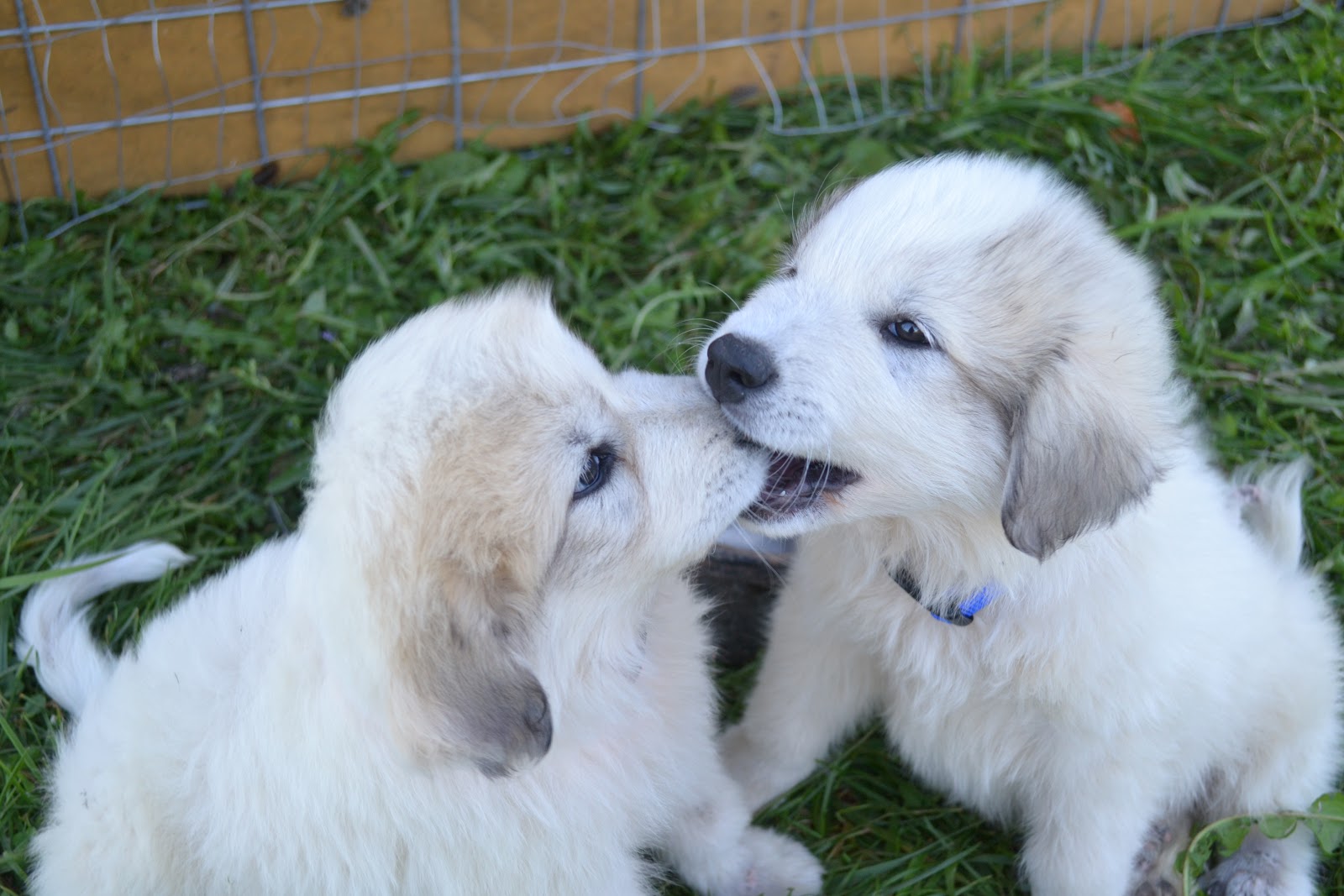
On Sunday, Susan and Dean picked up our two newest additions to our farm...


They are Great Pyrenees puppies, and will soon be working as guard dogs. Right now, they're in a makeshift pen in the chicken area, where they can get to know the chickens and Ben, one of the other guard dogs.


Their names are Luke and Leia - my suggestion, incidentally. Thank you, thank you.


Leia is definitely the more adventuresome of the two, while Luke is calmer and more serious.


But both of them are pretty mouthy.


Anyways, I just thought some puppy pictures would help enliven everyone's day. Playing with them certainly made mine.


Saturday, October 15, 2011

In Which I Process Chickens

Hello, all! Yes, yes, I know. You thought I dropped off the face of the earth. What actually happened was that precisely one month ago, our wireless router completely fried. The promised replacement was supposed to arrive by October 3, but clearly that has not happened.

Anyways, that is my excuse. But I do feel terrible for leaving everyone in the dark for so long, so I thought for this first blog post in over a month, I should do something big. Something flashy. Something involving viscera.

Welcome to Chicken Processing Day, the 2011 Edition.* Make sure you have your gingham apron, because you are about to get dirty.

First, Brian ties the birds up by their feet, then kills them as humanely as possible by opening the arteries on the sides of the neck with a very sharp knife. Autumn and I were both very happy to let him do this part.


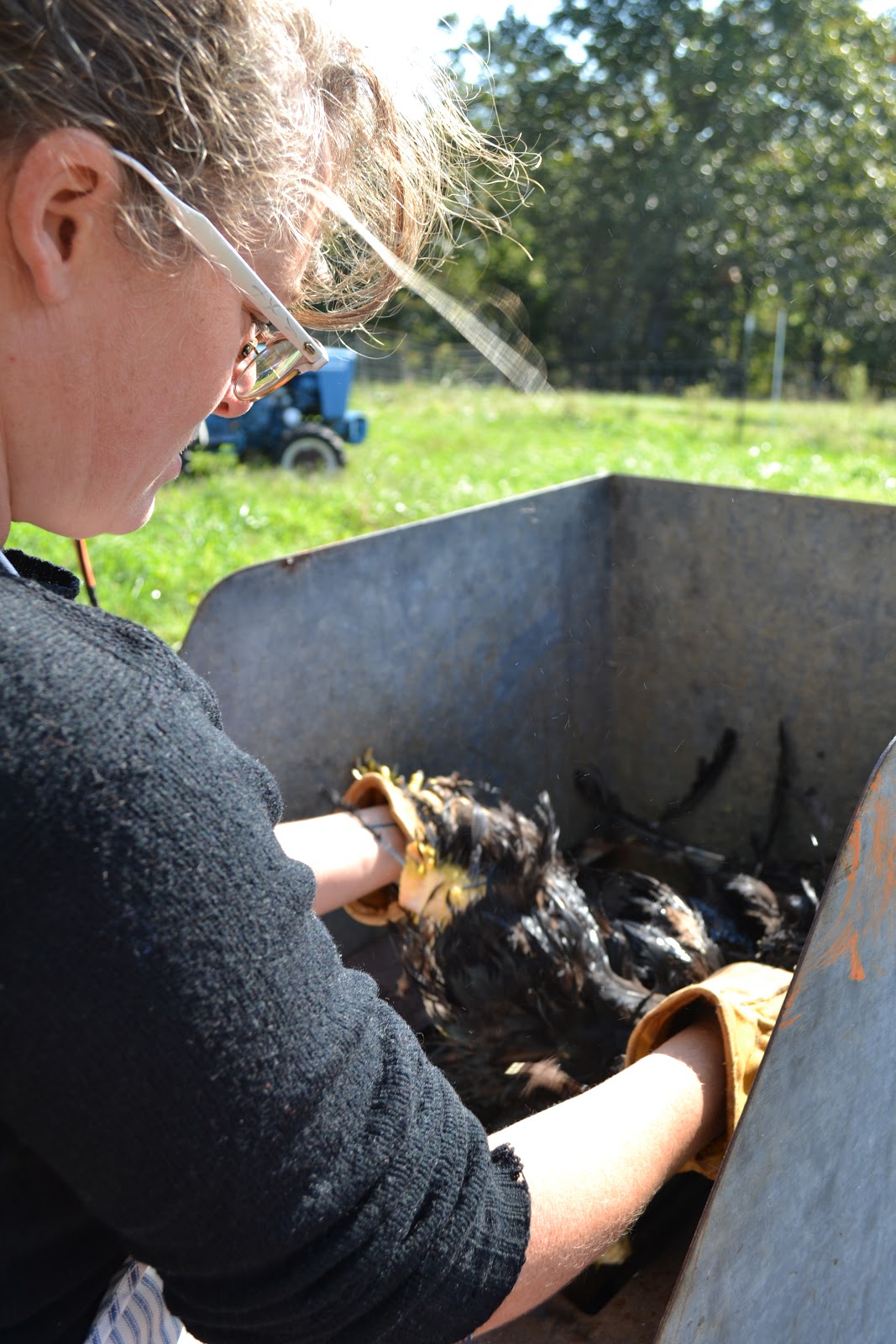
Then Caitlin scalds the birds by dipping them in 145 degree water for about a minute. This loosens the feathers so we can pluck them easily. You test them by plucking out some of the wing feathers. If they come out easily, it's ready.


Autumn and I were the pluckers for the day. The Featherman machines have rubber "fingers" that spin on a motor, which helps the plucking go much faster.


After all the killing and plucking was done, we put the birds in ice water to stay cold over lunch.


At lunch time, we relaxed and messed around with the barn cat.


In the afternoon came the "fun" part - evisceration. Brian started by removing the head, feet and crop from the bird. Then Caitlin, Autumn or I got to do the work of removing all its organs.


See that vivid shade of taxicab yellow? That is the color that chicken fat should be. These are pastured birds that are free to roam outside, eating grass and bugs and living the good chicken life. That fat is full of all sorts of nutritious and delicious stuff. And damn, does it taste good.

Also, the birds we processed were all three years old - pretty ancient for a laying chicken. Most large farms don't keep birds around after one year.


And sometimes, you might find a surprise.


*Actually, we processed chickens back in July too. But I didn't really get very many pictures that time.